Explore

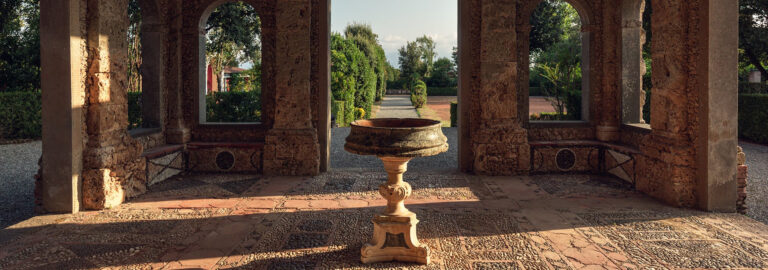
Villa Reale di Marlia is one of the most important historical complexes in Lucchesia , where architecture, garden art, and landscape blend into a site of great cultural value. The property includes buildings such as the Main Villa and the Clock House, which host two museum spaces, as well as an extensive historic park with gardens designed and transformed over the centuries.

Today, the complex is the focus of significant restoration and enhancement projects carried out by the current owners, Henric and Marina Grönberg, who oversee its conservation and public access.

The Gardens of Villa Reale

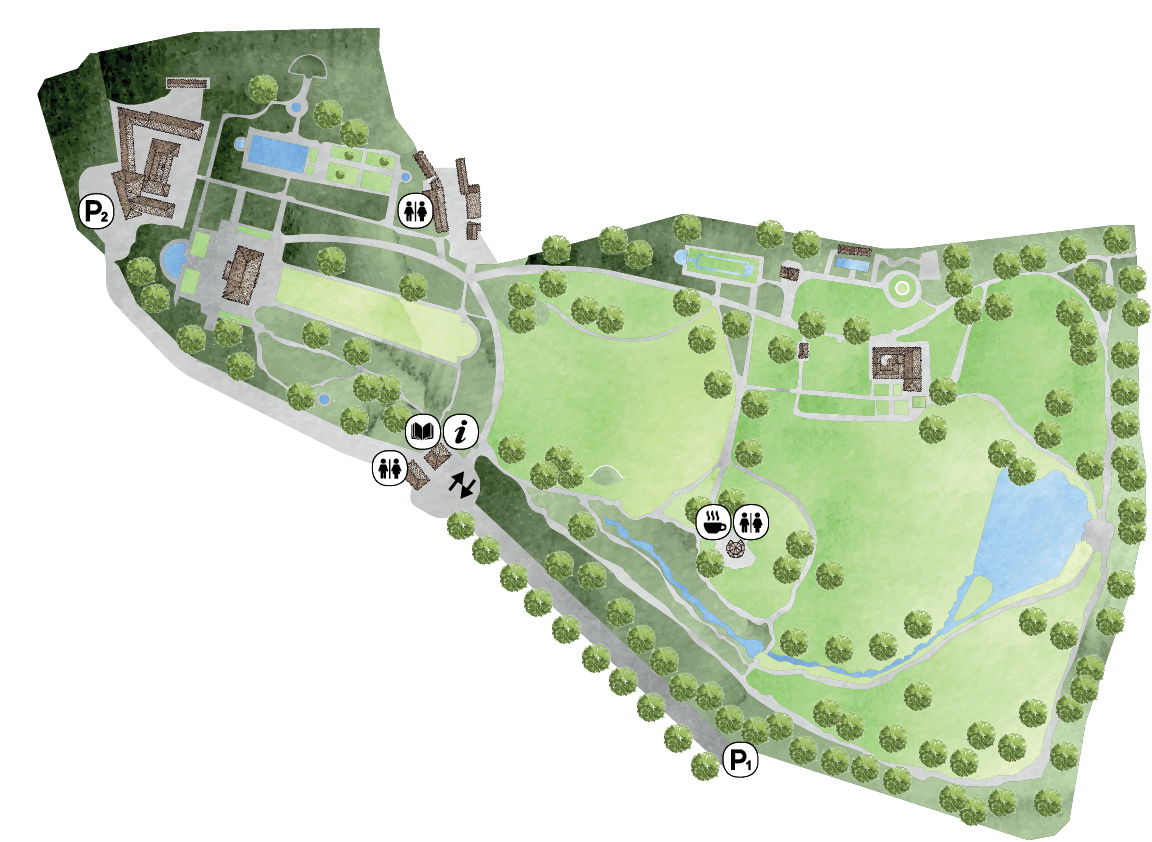
THE MAP

The map shows the gardens inside the park. You can learn more by exploring the map or by entering the section with the box below!

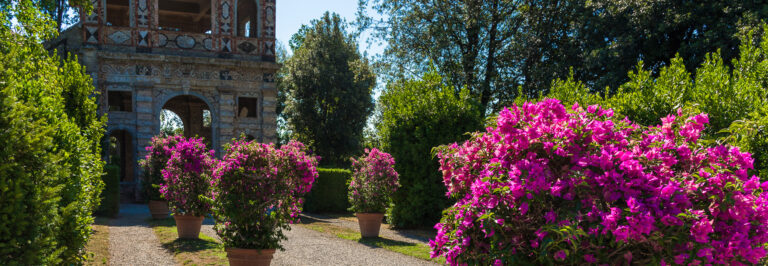
The park of Villa Reale di Marlia covers approximately 16 hectares and reflects transformations that took place over the centuries, illustrating two distinct phases of Lucchese villa architecture. One part preserves the 17th-century layout, with hedges, flowerbeds, and monumental trees, while another area is designed in the style of an English landscape garden, featuring winding paths, shaded groves, and scenic viewpoints, including a charming artificial lake.

Among the most notable spaces is the Italian Garden of the Bishop’s Villa, characterized by regular geometries and lawns that enhance the historic building. Next to the ancient fishpond lies the Lemon Garden, with elegant rows of potted citrus trees recalling the tradition of Lucchese villas. Near the Renaissance nymphaeum known as the Grotto of Pan is the Spanish Garden, introduced in the 20th century, featuring basins, fountains, and geometric designs inspired by Mediterranean style.

One of the most striking features of the park is the famous Green Theatre, a theater formed by tall sculpted hedges that create niches and stage-like scenery, historically used for open-air performances and celebrations.

The park is also renowned for the scenic Camellia Walkways and the abundant presence of these plants, linking the villa to Lucchesia’s botanical tradition.

The Architecture of Villa Reale

THE MAP

The map shows the architectures and buildings inside the park. You can learn more by exploring the map or by entering the section with the box below!

The architecture of Villa Reale di Marlia forms a harmonious ensemble reflecting centuries of transformation and refined artistic evolution typical of the historic villas of Lucca.

At the heart of the estate stands the Villa Reale, one of the most prestigious historic residences near Lucca. Originally built as an early medieval fortress, it was profoundly redesigned in 1806 by Elisa Baciocchi. Nearby stands the Bishop’s Villa, built in the 16th century on the remains of a former medieval property of the Bishopric of Lucca.

Of remarkable scenic impact is the Water Theatre, a grand 17th-century exedra combining architecture and water features. The Twin Entrance Buildings reflect refined Neoclassical taste, while the Clock House recalls the Baroque phase of the estate.

Among the oldest features is the Pan’s Grotto, a refined 16th-century nymphaeum. From the 20th century comes the swimming pool designed in 1928 by Jacques Gréber for Countess Anna Laetitia Pecci-Blunt.

Together, the architectural heritage of Villa Reale di Marlia offers visitors an immersive journey through history, art and landscape in Tuscany.

The Museums of Villa Reale

THE MAP

On the map you will find the Museums of Villa Reale. You can learn more by exploring the map or by entering the section with the box below!

Immerse yourself in the history and culture of Villa Reale di Marlia by visiting its fascinating museums, carefully restored to highlight the two main architectural buildings of the estate. During your visit, you can follow the free audio guides, downloadable room by room on your smartphone through the Villa Reale app, for a complete and independent experience.

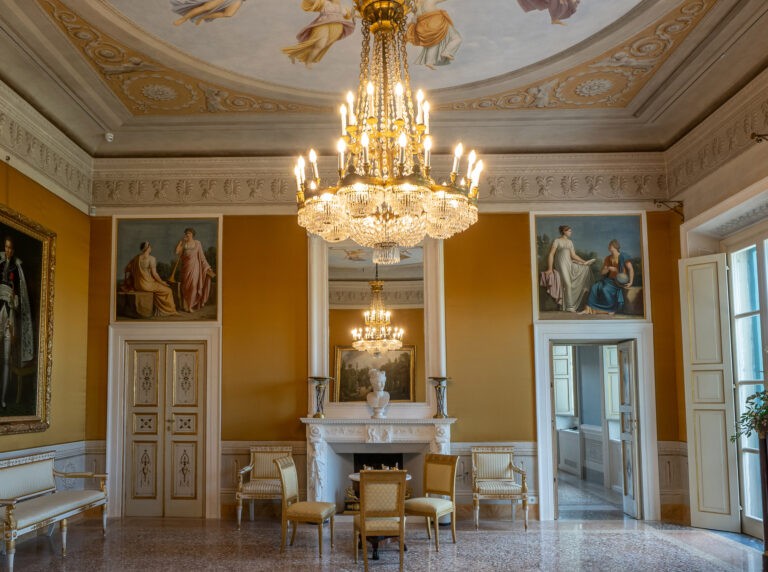
Inside the Villa Reale, the rooms of Elisa Bonaparte Baciocchi represent one of the most important examples in Italy of the Empire style, with references to Imperial Rome and the Egypt of the Pharaohs. Elisa, sister of Napoleon and princess of Lucca and Piombino, purchased the Villa in 1806 and left an indelible mark following the “Tout comme à Paris” principle requested by her brother. The museum is spread over two floors, accessible by elevator, allowing visitors to admire each room with the support of the digital audio guide.

Equally captivating is the Clock House Museum, which preserves the treasures of the Pecci-Blunt family and the collector Anna Laetitia Pecci-Blunt. Among its exhibits are memorabilia, ancient books, historical periodicals, phonograph records, Native American artifacts, and a collection of dolls from around the world. The museum offers a unique insight into the Villa’s cultural heritage and, accessible via stairs, represents a must-see experience for those wishing to explore the history, art, and curiosities of Villa Reale di Marlia.

Free audio guides: download our app

Download our app “Villa Reale” and enjoy free audioguides on your smartphone for the park and the museums.

In collaboration with

Great Gardens of The World - logo
Great Gardens of the World
Logo Grandi Giardini Italiani
Grandi Giardini Italiani
logo AVPL_GRIGIO SCURO
Associazione Ville e palazzi Lucchesi
Andare Per Giardini
Logo Dimore Storiche Italiane
Associazione Dimore Storiche Italiane
Fédération Européenne des Cités Napoléoniennes

Pay safely

PayPal, MasterCard, Visa, PostePay
Villa Reale di Marlia © 2026 Amilda Srl, Via Fraga Alta 2 – 55014 Marlia, Capannori (LU) – P.Iva 02352070466
Tel: +39 0583 30108 | e-mail: info@villarealedimarlia.it
Website by Proteina CReativa | photo by L. Bartoli pgmedia.it – Vincenzo Tambasco